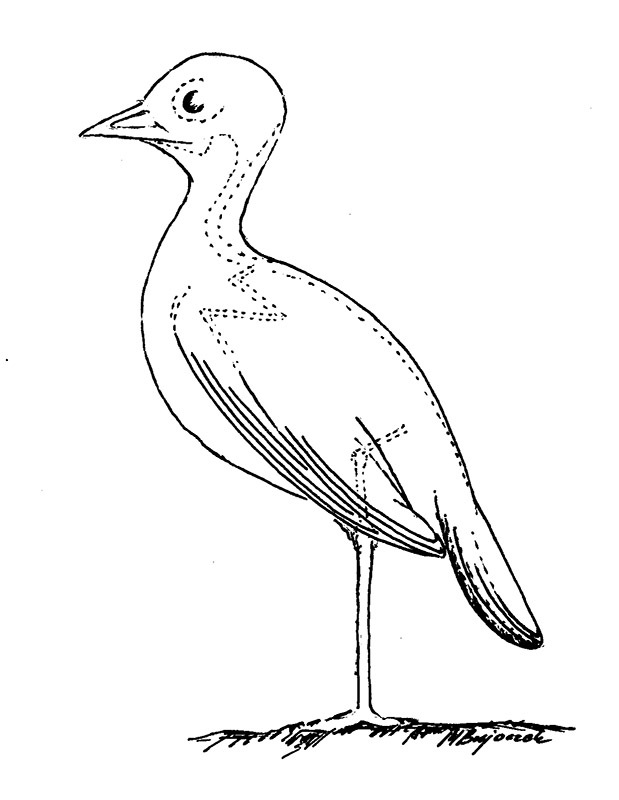
We are conducting research on the oldest birds from the territory of Poland, which lived in the early Oligocene (approximately 30 million years ago). All the remains we have studied were found in marine deposits in southeastern Poland. So far, three specimens have been described. Among them are: the hummingbird Eurotrochilus noniewiczi, a bird with a pigeon-like foot not assigned to any systematic group, and a new species of passerine bird. The latter, named Jamna szybiaki (the name comes from the village of Jamna in the Podkarpackie Voivodeship, where the bird was discovered, and from the surname of the finder, Robert Szybiak), is an almost complete and very well-preserved specimen. It is one of only two passerine birds from the Oligocene described worldwide and the first with feathers so well preserved. The skeletal structure indicates that it was a frugivorous or insectivorous bird, roughly the size of a thrush or lark. The structure of the wing and tail feathers provided information about its external appearance. Its plumage is typical of a strong flyer (short, rounded wings and tail), while the long legs suggest it primarily moved on the ground and among shrubs.
Publications on Oligocene birds:
- Bocheński Z., Bocheński Z. M. 2008. An Old World hummingbird from the Oligocene: a new fossil from Polish Carpathians. Journal of Ornithology, 149:211–216.
- Bocheński Z.M., Tomek T., Świdnicka E. 2010. A columbid-like avian foot from the Oligocene of Poland. Acta Ornithologica 45(2):233-236.
- Bocheński Z.M., Tomek T., Bujoczek M., Wertz K. 2011. A new passerine bird from the early Oligocene of Poland. Journal of Ornithology, 152(4):1045-1053.